


Summary
While developing an eCommerce website, one needs to focus on specific key features that can enhance the effectiveness of any business venture.
This includes modifying or adding new features related to your niche or your products or services. The type of eCommerce features you implement might affect organic traffic and overall success.
So, what are you waiting for?
Start incorporating these key eCommerce features and let your business grow!
Successful eCommerce businesses depend not only on their products but also on the robust features that define user experiences and conversion rates.
The best eCommerce features allow seamless shopping, increase user engagement, and drive more sales.
Recent studies suggest that 68.8es and product reviews on% of users abandon their carts due to a bad user experience; hence, an intuitive and feature-rich online store becomes essential.
Whether checkout optimization, personalization, or mobile responsiveness enhancement, these key features can make or break your business.
Let’s explore the top 15 eCommerce features to thrive your online business and boost your revenue.
Table of Contents
1. Mobile Responsiveness
The increasing use of smartphones for online shopping has led Google to prioritize mobile-first indexing. It rates the performance of your website on a mobile device as well as on a PC, smartphone, and tablet while deciding your search rankings.
A mobile-friendly eCommerce website adapts to multiple screen sizes and increases user experience, thus informing Google that your site is relevant and user-friendly. This prevents you from losing your market edge online and ensures that your content reaches the target audience.
Take Starbucks, for example. The coffee giant realized mobile usage was rising and updated its website and app to deliver users the best mobile experience.

Focusing on navigation, speed, and intuitiveness in design, Starbucks has massively enhanced customer satisfaction and user experience.
This placed them higher in search results and increased sales via their mobile app, proving that a mobile approach can guarantee success in today's competitive world.
User-friendly navigation allows visitors to find what they want without hassle, lowering bounce rates. Since users can reach relevant content more quickly, they are less likely to leave instantly. A well-defined and logical navigation structure encourages users to explore further, increasing session duration.
Take the case of Amazon, where good breadcrumb trails and well-organized category hierarchies allowed users to arrive at products with much less hassle.
Breadcrumbs help users understand precisely where they are on the site and make backtracking very simple.
An example of breadcrumb navigation that Amazon uses is given in the image above: Home & Kitchen < Kitchen & Dining < Dining & Entertaining < Glassware & Drinkware < Tumblers & Water Glasses, which is mentioned right above the image.
This decreases the likelihood of bounces and extends session duration, improving Amazon's overall SEO performance.
3. Fast Loading Speed
Speed is one of the critical pointers determining your website's ranking from the perspective of Google's Core Web Vitals. These vitals are part of Google's ranking criteria, focusing on user experience through metrics related to loading performance and interactivity.
A slow-loading website annoys users, increases bounces, and affects your SEO performance. Tools like Google PageSpeed Insights can show you which areas of your site need an upgrade.
For example, some brands, like Walmart, have made huge profits simply by working on site speed optimization.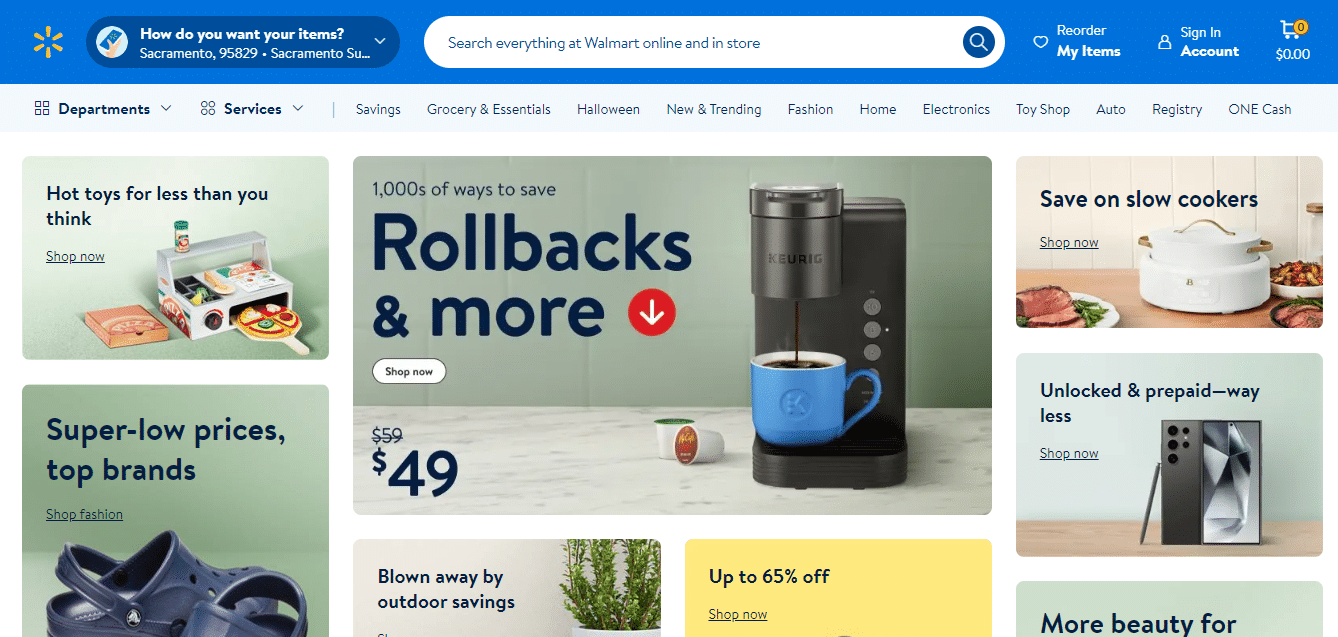
Implementing changes based on Core Web Vitals allowed Walmart to reduce downtime and thus achieve much better user engagement and higher conversions.
Speed is important for rankings and seamless user experience, so addressing these metrics becomes crucial. You can also use third-party tools such as PageSpeed Insights to monitor your site's performance, applying best practices to keep pages at rapid loads.
Secure payment methods, especially Secure Sockets Layer (SSLs), foster confidence in online buyers, increasing your overall sales.
Customers who believe their payment credentials are safe and encrypted will likely complete their purchase, reducing shopping cart abandonment. This improves conversions and SEO, as search algorithms like sites with better user interaction and lower cart abandonment levels.
An example of a brand that implements secure payment methods is Shopify.
By ensuring all its stores are kept safe with SSL certificates, Shopify allows both shop owners and customers to have secure transactions.
By focusing on security, Shopify builds trust, which leads to fewer cart abandonments. Consequently, Shopify stores record higher conversion rates, with an improved user experience positively impacting SEO performance.
5. Product Search and Filters
Advanced product search and filters are significant factors in a better consumer experience and improved conversion rates.
It lets customers spend less time locating what they seek, making their buying experience swift, easy, and more pleasant.
This also helps effectively use keywords in product tags, thus improving the relevance and accuracy of the search results. Since product tags are optimized with keywords, the site's search engine can better match customers' queries and show them the most relevant products.
Nike is an excellent example of how advanced search options can improve the user experience.
Their website contains a clean, intuitively placed search bar and filters such as size, color, range, and style.
These help narrow down the choices quickly for seamless shopping. Moreover, Nike uses optimized product tags containing the relevant keywords to provide highly accurate search results.
For instance, if customers search for "running shoes," they are directed to the relevant product portfolio that supports that need and are most likely to purchase.
Focusing on search optimization and filtering has helped Nike increase conversions by providing relevant, personalized results that support higher user satisfaction.6. Customer Reviews and Ratings
Customer reviews and ratings are crucial in improving your SEO because they continuously add fresh, keyword-heavy content to your website. They also help you gain better search engine rankings and build trust with potential buyers.
You can encourage customers to review your online store through follow-up emails, incentives, and a straightforward review process.
Apple is one of the leading examples of using customer reviews and ratings to enhance its SEO and overall brand presence.
Apple collects plenty of keyword-rich content by making the review process painless right on the product pages and encouraging feedback via email follow-ups.
This significantly improves the company's position on search engines and helps build trust with potential customers.
For example, every time a new iPhone or MacBook model hits the stores, a flood of customer reviews pushes it to the top in search results, driving more traffic, improving SEO performance, and reinforcing Apple's tradition of quality.
Abandoned cart recovery helps online businesses convert missed opportunities into sales and increase site activity.
One effective approach to target cart abandonment recovery is to create retargeting email campaigns to attract customers who abandoned their shopping carts and help them make purchases.
A great example of effective abandoned cart recovery is Wayfair, the leading online home goods retailer.
They use email retargeting with enticing images and personal recommendations to remind customers about their abandoned shopping carts.
Wayfair also offers special discounts or free shipping to lure shoppers back. This drives conversions and site engagement since customers will stay on-site longer, exploring additional products and boosting their loyalty to the brand.
9. Inventory Management
Efficient inventory management is essential for any eCommerce company since it directly impacts customer satisfaction and trust.
Additionally, seamless inventory management features will reduce most of the errors related to products to a minimum where the customer feels annoyed if there is a discrepancy in stock or notifications of out-of-stock issues, hence losing confidence in them.
Target is the best example of inventory management, as its effective tracking system helps to provide the optimum quantity of products in-store and online at all times.
It analyzes the data and automated tools to predict demand so that the most popular items remain on hand without excess inventory.
It helps them proactively avoid product-related failures and improves customers' shopping experience by earning consumers' trust.
Therefore, Target has established itself as a reliable retail brand, demonstrating how effective inventory management methods help satisfy customers and assure brand loyalty.
10. Multi-Channel Selling
Multi-channel selling allows you to tap into a more extensive customer base and invite more people to your store, generating more traffic and, by default, more sales.
It also boosts customers' convenience by allowing them to choose how and where to buy. For example, a customer may find your product on TikTok, go to Google to see the reviews, and buy it from your website.
This convenience increases customers' satisfaction while creating loyalty because buyers simply enjoy the seamless feeling of shopping.
For instance, eyewear brand Warby Parker implemented multi-channel selling to empower its customers to shop anywhere, from its eCommerce site to its online stores to virtual try-on technology.
Through this approach, they've created a compelling brand experience where customers can browse online, try on glasses in-store, or use an app that shows them exactly how frames would look on their faces.
11. Subscription Model
The subscription model is an excellent tool for improving customer retention, which, in turn, means more returning visitors.
Customers who feel valued and engaged through their subscription will most likely return, perpetuating a loyalty cycle.
Take Netflix, for example.
Moving from a pay-per-view to a subscription model allowed the business to connect with its users. Its subscribers enjoy unlimited access to a huge library of content for a flat monthly fee, which will surely make them keep coming back for more to discover new delights.
This consistent engagement helps Netflix's search engine visibility because return visits tell Google your site is home to quality content.
12. Advanced Analytics and Reporting
Advanced analytics and reporting help you understand how well your website has been performing and what influence it has on SEO rankings. By monitoring key indicators like organic traffic, bounce rates, and conversion rates, you can identify what works for you and what does not.
Take Etsy as an example.

Advanced analytics and reporting are set up to track buyer behaviors and current market trends within this marketplace.
Etsy supports sellers in studying metrics that include search queries and sales data to update product listings effectively and raise their visibility.
This adaptability not only increased the success of the sellers but also increased overall SEO performance at Etsy.
By embracing metrics tracking, you position your brand to refine strategies that drive more traffic and improve ranking effectively.
13. SEO and Marketing Tools
SEO and marketing tools provide businesses with comprehensive analytics of their online presence, enabling them to make informed decisions, improve visibility, and drive traffic at a higher rate.
On-page optimization is one of the most effective SEO tactics and includes optimizing meta tags and alt text so that search engines interpret your content correctly.
For instance, meta tags describe the brief content of your page, whereas alt text makes images accessible and helps the search engines understand the images through alt text.
One of the major brands that are using SEO tools quite effectively is Airbnb.
They improved their search rankings considerably by optimizing their website with extended on-page elements and using strong SEO tools.
The strategic approach, in such a way, provided more comfort for the users and increased visibility in the competitive market.
By constantly updating itself with SEO and marketing tools, Airbnb has increased organic traffic and stayed ahead in the travel industry.
14. Multilingual Support
Multilingual support is crucial in business development, especially when reaching international markets.
It allows online businesses to speak to a wide range of customer bases and have better relationships by providing content in many languages, improving user experiences.
This strategy respects local cultures and is very powerful in terms of engagement and conversion rates.
Take Coca-Cola, for example, a well-known brand that has successfully implemented strategies of localization and internationalization.
By changing marketing campaigns to appeal to a specific culture, from slogans in the native language to flavors suiting regional tastes, Coca-Cola is a household name in many countries.
15. A/B Testing and Optimization
A/B testing refers to comparing two different forms of a webpage or app to see which performs better.
With continuous user behavior and preference analysis, businesses can make data-influenced decisions that enhance user experience and improve key SEO metrics.
Booking.com, one of the most renowned online travel agencies, conducts A/B testing for its website, from call-to-action buttons and page layouts to pricing.
By gathering data on user interactions with these elements, Booking.com has refined its platform significantly. This approach has increased bookings and customer satisfaction, boosting its search engine visibility as more users engage with its content.
Incorporating continuous A/B testing into your strategy allows you to adapt effectively to user preferences, fostering a more engaging experience that drives traffic and improves search engine rankings.







7. Social Media Integration
Social media platforms such as Facebook, Instagram, and Pinterest all play an essential role in increasing your brand's visibility. The more users interact through likes, shares, and comments, the more search engines think your brand is relevant and trustworthy, boosting your ranking.
A fabulous example of social media integration includes Glossier, a beauty brand that uses social media to complement its eCommerce presence.By asking customers to share experiences and product reviews on platforms like Instagram and TikTok, it has successfully built a community around itself, with people actively engaging with the brand.
The company thrives in a competitive marketplace, with its social media presence breeding trust and authenticity.
Engaging customers through social channels raises brand awareness and extends Glossier's visibility online, proving the potential of social media in eCommerce.