Summary
Successful platforms are all about innovative, scalable, and customer-driven approaches.
They succeed through cutting-edge innovations, seamless user experiences, and responses to changing needs.
Explore the platforms this blog mentions for inspiration or shopping needs to see their standout features and strategies.
eCommerce has grown exponentially to become one of the cornerstones of modern shopping.
It has reshaped how people find, buy, and get their products.
With consumers becoming more accustomed to digital convenience, global eCommerce sales are expected to surpass 8 trillion dollars, growing by a robust 39%. This steady growth shows an increasing dependence on online sites and the scope of business operations to succeed in this digital market.
When you think about the various eCommerce sites in play today, identifying which aspects contribute to the success of the more successful ones helps businesses decide about resource allocation.
This blog breaks down the leading websites that set the future course of eCommerce and their features that are transforming the way the eCommerce industry works.Table of Contents
1. Amazon

The largest online store in the world, Amazon offers exceptional customer service and an amazing selection.
What began as an online bookstore has evolved into a one-stop store for cloud computing services, apparel, electronics, and food.
It is through features such as one-click ordering, fast delivery through Prime, and AI-driven recommendations that Amazon is thriving.
The Amazon Marketplace is an access platform to millions of customers and is a superpower for eCommerce entrepreneurs.
2. Walmart

Walmart has significantly marked eCommerce through seamless online and offline shopping integration.
Known for its "Everyday Low Prices," Walmart uses the extensive network of its physical stores to enhance digital offerings.
The features like free curbside pickup, next-day delivery, and integration with Walmart+ have made it the favorite among value-conscious shoppers.
Walmart's marketplace opens up a wide consumer base for sellers, thus making them benefit from a household name, but with the trust intact.
3. eBay
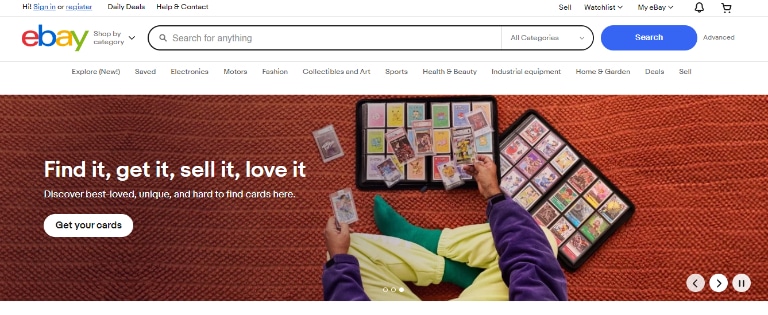
eBay is popular for its auction-style and peer-to-peer sales. Here, one can find a platform for both individuals and businesses.
From rare collectibles to everyday things, eBay connects buyers and sellers worldwide.
Its notable features include flexible pricing models, an auction or "Buy It Now," strong seller tools, and a straightforward interface for small businesses.
For eCommerce businesses, eBay is the go-to marketplace for reaching niche audiences and building loyal customer bases.

Apple has become the tech giant perfecting the science of direct-to-consumer eCommerce in style.
Its store, being sleek and intuitive in every detail, is designed for delivery on its premium shopping promise.
Apart from promoting these leading-edge products ranging from iPhones and iPads to Macs, the Apple website even adds value, such as tailormade devices, trade-in facilities, and financing options for customized customer satisfaction.
Apple is the epitome of brand storytelling and frictionless customer journeys for the eCommerce enthusiast, demonstrating the power of an excellent user experience.

Target embraced digital transformation, emphasizing customer convenience features, including app-based shopping, same-day delivery, and curbside pickup options, that make it stand out among the best in omnichannel retail.
With a balance between affordable prices and trendy product lines, Target keeps appeal among various demographics.
Target is an online retailer looking to increase sales and client loyalty using technology and customer-focused tactics.
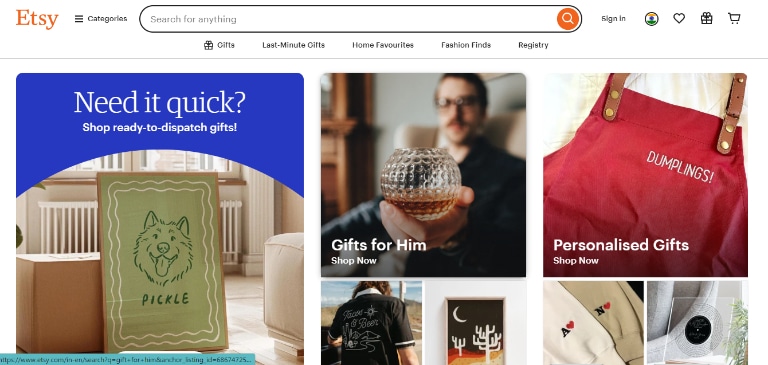
Etsy is an online go-to for artisans, crafters, and collectors.
The marketplace focuses on individuality and handmade, vintage, and rare items. This allows a small business and independent creator to connect with an international audience with a passion for unique, one-of-a-kind items.
For the eCommerce entrepreneur, Etsy has tools that help in branding, inventory management, and analytics to scale without losing authenticity.
It also encourages a sense of community through its seller forums and offers guidance and support for navigating the world of online retail.
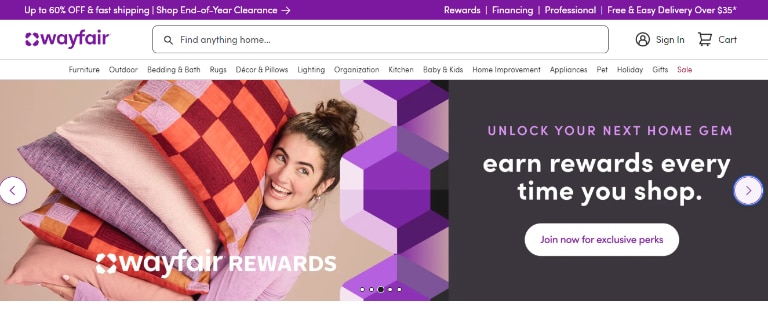
Wayfair is far superior to the competition in terms of furnishings and interior design.
Its extensive collection includes both high-end and low-cost styles.
Its user-friendly interface and interactive features, like 3D room planners and augmented reality previews, let customers picture things in their homes.
The delivery and assembly services offered by Wayfair guarantee prompt arrival and assist in eliminating the hassles involved in handling large objects.

Chewy has changed the face of how pet owners shop for their pets.
With its superb customer service, Chewy provides extra miles of personalized touch through handwritten cards and product suggestions that cater to each customer's needs.
The subscription model ensures regular delivery of pet essentials and allows pet owners to shop easily.
Chewy's customer-first strategy can be learned from these eCommerce businesses.
Its proactive assistance, easy returns, and round-the-clock customer service show how building an emotional bond can result in enduring success and loyalty.
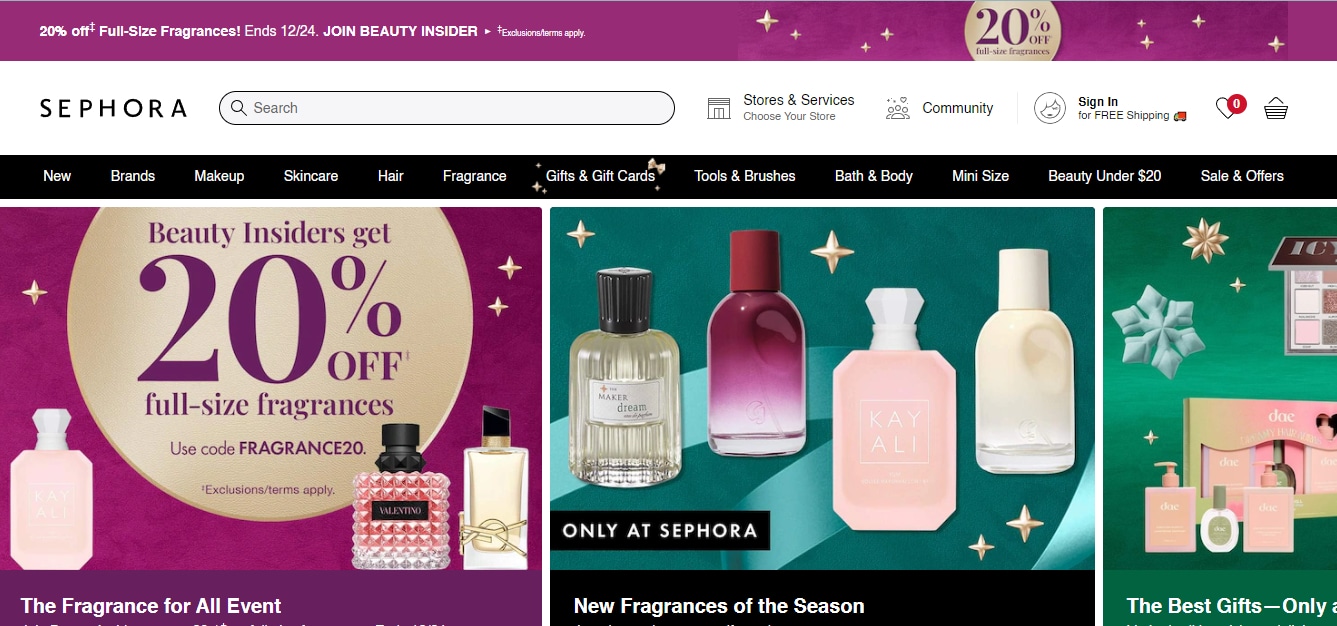
The foundation of Sephora's supremacy in the cosmetics sector is innovation.
Their strong internet presence is complemented by an engaging mobile application and an excellent social media approach.
Features like virtual try-ons and AI-driven skincare consultations help customers make the most informed decisions while purchasing from the comfort of their homes.
In a way, Sephora exemplifies how technology can be woven with personalization for an eCommerce business.
Its "Beauty Insider" loyalty program is another great example of how reward systems can encourage repeat purchases and create community among customers.

Shopify is becoming the go-to platform for small and medium-sized companies looking to establish an online presence.
It is a tool with intuitive interfaces, customizable templates, and a comprehensive app ecosystem, so it is easy even for the least technical users to set up their store.
Shopify also gives robust integrations of payment gateways, inventory management, and marketing tools, enabling businesses to scale efficiently.
Its mission?
Democratizing eCommerce and giving every entrepreneur the tools to succeed.

Shein has brought a storm to the fashion world by offering affordable fashion products while being driven by the trend.
Their model creates designs and produces items directly based on real-time consumer information, ensuring whatever they make is in fashion.
Its aggressive digital marketing, mainly through social influencers, has brought Shein to international stardom.
Shein has drawn in younger audiences while maintaining customer loyalty by concentrating on direct-to-consumer sales and adopting a mobile-first approach.

StockX is like a stock exchange for collectibles, streetwear, and footwear.
Similar to buying and selling stocks, the site features a unique bidding system that allows buyers and sellers to negotiate at real-time prices.
Also, every product sold on this platform is authenticated, bringing trust to its audience.
By catering to a niche audience, this innovative approach for eCommerce proves that specialized platforms can find success by addressing specific customer passions.

DoorDash has revolutionized food delivery by combining on-demand services with conventional eCommerce tactics.
Its user-friendly software allows customers to order food, browse menus, and track real-time delivery.
DoorDash offers companies data insights to improve operations, marketing exposure, and logistical support.
DoorDash's expansion explains how eCommerce concepts, such as customer convenience and data-driven decision-making, may be implemented in many sectors.

ThredUp has become a market leader in used clothing with a growing consciousness about going green.
It allows sellers to list their pre-worn clothing, giving a window to quality items for less price-conscious buyers.
With increasing trends in circular economies, sustainability helps ThredUp compete against other secondhand sales.
A clean interface and extensive catalog make their website accessible and desirable for an expansive audience, proving that second-hand also becomes chic, scalable, and desirable.
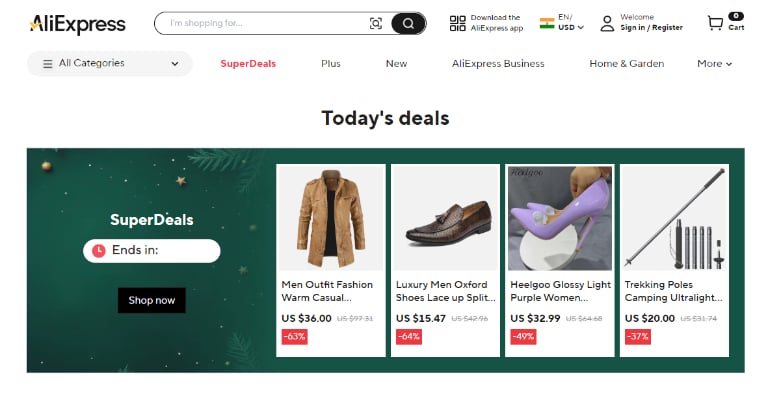
AliExpress is a well-known brand that enables you to purchase goods at a reasonable cost anywhere globally.
It also offers exceptional cross-border trade since it links buyers and sellers from other nations, frequently directly from manufacturers.
This makes it perfect for dropshipping and entering foreign markets because the firms can source goods at cheaper prices.
Overall, AliExpress is a household name in international eCommerce because of the variety of products, cost-effectiveness, and shipping convenience.
16. Zappos

Known as the destination of choice for shoes, Zappos is an industry leader in merging niche expertise with unbeatable customer service.
This "WOW" philosophy shows through their lenient return policies, 24/7 customer support, and quick shipping.
For any eCommerce business, Zappos offers a master class in building brand loyalty through focusing on customer satisfaction and specialization.
17. Rakuten

Rakuten has redefined the concept of online shopping by integrating eCommerce with rewards via its cashback program.
It encourages its customers to shop with participating retailers, and businesses enjoy visibility and a loyal customer base.
The ecosystem of Rakuten includes affiliate marketing tools as well as easy integration with the major eCommerce platforms, which makes it an innovative partner for businesses in the pursuit of enhancing customer retention and sales.18. Overstock

Overstock is the marketplace where consumers can find affordable, quality furniture and home decor.
It allows businesses to liquidate excess inventory and connect with budget-conscious shoppers.
Its features, such as seasonal sales, detailed product descriptions, and customer reviews, support both sellers and buyers in creating a seamless shopping experience on Overstock.
19. Newegg

For technology fanatics, Newegg is like a mine of gold. It features electronics and computer parts coupled with its gaming gear.
The store has generated a devoted niche following for buying tech-related things, offering businesses an opportunity with seller programs, a focused audience, and marketing techniques such as daily deals.
Its emphasis on product-depth information and reviews from experts is what has separated the company from most others selling in niche marketplaces.
20. Best Buy

One feature of this site that stands out is its smoothness between the online and in-store buying experience.
The site lets consumers browse products online and have them shipped to their local Best Buy within hours, creating an eCommerce experience that brings a brick-and-mortar immediacy.
For eCommerce brands, Best Buy is a model example of how to offer flexibility and convenience.
Its value is added through its tech support services, especially the Geek Squad, which has further created loyal customers returning both for products and expertise.