
Summary
To hire a good Shopify developer, check Shopify experience, ask for real examples and get a written scope. This guide gives you ten questions, the factors that change cost, two real Virtina projects and the red flags.
Introduction
Hiring a Shopify developer is a bet on your next twelve months of sales. A good one ships a faster, easier store. A poor one leaves you with broken apps, surprise invoices, and a theme nobody can update.
Most owners start with a price and a portfolio. That misses what predicts success. Look at how they scope work, communicate and support the store after launch.
This guide is written for business owners, not engineers. You get plain questions, a straight look at pricing, real examples, and warning signs. Virtina builds Shopify stores, so we say where we fit and where another option may suit you better.
Table of Contents
- What does it take to hire a good Shopify developer?
- Which questions should you ask before you hire a Shopify developer?
- How much does a Shopify developer cost?
- What have Shopify projects looked like at Virtina?
- What are the red flags when hiring a Shopify developer?
- How do you work with a Shopify developer day to day?
- Should you hire an agency, a freelancer or a full-time developer?
- People Also Ask
- Conclusion
- Frequently asked questions
What does it take to hire a good Shopify developer?
A good Shopify developer combines proven Shopify experience, clear communication, and a written scope with a price you can read. Skill alone is not enough. Many projects fail because of unclear scope, not weak code.
Think of the hire as three checks.
Can they build what you need? Can they explain it plainly? Will they still answer after launch?
When is a theme and a few apps enough?
A pre-built theme with a few apps is enough when you sell a simple catalog with standard checkout. Many new stores launch this way and do fine. You can often change colors, fonts, and sections yourself in the theme editor.
In that case, hire a developer only for a specific fix. A full build would cost more than the store needs.
When do you need a developer?
You need a developer when the store must do something the theme and apps cannot. That usually means custom theme sections, links to an ERP or inventory system, B2B pricing rules, or faster page speed. Checkout changes and moving data from another platform also call for one.
Shopify Plus changes what you can build, so read the Shopify Plus features before you write a brief. If you are still choosing a platform, Shopify or BigCommerce for wholesale compares both for B2B sellers.
Short version: hire a developer for custom work and fixes, and keep simple jobs in the theme editor.
Which questions should you ask before you hire a Shopify developer?
Ask every candidate the same ten questions and compare the answers side by side. Specific answers with examples beat confident general ones.
How much Shopify experience do you have?
Look for experience on Shopify itself, not general web work. Shopify has its own theme language, called Liquid, and its own app and checkout rules. Ask how long they have built on it and which kinds of stores they know.
A short Shopify development checklist gives you topics to cover in that first conversation.
Can you show me Shopify stores you have built?
Yes, any serious developer can show live stores or written case studies. Open them on your phone and click through to the cart. Ask what the developer did personally on each one.
How do you handle theme customization?
A good developer chooses between a pre-built theme and custom sections based on your goals. A pre-built theme is faster to launch and costs less. Custom sections fit your brand and your buyers better.
Ask whether you can edit content yourself afterward. A theme only the developer understands becomes a trap.
How do you connect apps and integrations?
A good developer uses as few apps as the job allows and tests how they work together. Each app adds code that can slow pages or clash with another app. Ask how they connect shipping, inventory, and marketing tools.
Also ask who fixes a conflict after launch. Deeper work, such as linking an ERP, falls under Shopify development services.
How do you build for mobile?
A good developer designs for the phone first and tests on real devices. Many shoppers browse on phones, so a clumsy mobile checkout costs sales. Ask which devices and browsers they test, and how they check forms and tap targets.
How do you keep the store fast?
A good developer treats speed as a feature and can name what they will do about it. Ask about image compression, limiting apps, and clean theme code. Request before and after speed scores from a past store.
For the wider picture, see eCommerce performance optimization.
How do you handle SEO during the build?
A good developer builds search basics into the store from day one. That means clean page titles, sensible URLs, structured headings, and redirects when pages move. Ask how they protect your rankings if URLs change.
The eCommerce SEO checklist lists the basics you should expect.
How do you handle payments and security?
A good developer knows which payment options your buyers expect and keeps card data out of your own code. On Shopify, card entry happens in Shopify’s hosted checkout, so your developer should never store card numbers. Ask which gateways they have set up and how they test a failed payment.
To compare options, read about payment gateways.
What happens after launch?
A good developer states in writing what support follows launch. Virtina states a 30 day support period on its Shopify work. Ask every developer what theirs covers.
Ask about bugs, app conflicts, theme updates, and how quickly they reply.
What are your timeline and pricing structure?
A good developer gives a time estimate and a price basis before work starts, tied to a written scope. Ask what is included, what counts as extra work, and which dates depend on you, such as content and approvals. The next section covers what drives the number.
Short version: ask about experience, examples, themes, apps, speed, SEO, payments, support, and price, and trust the specific answers.

How much does a Shopify developer cost?
The cost depends on scope, so no single rate fits every Shopify project. Virtina does not publish price figures. It gives a written quote after reviewing your store.
We avoid quoting averages here because they mislead. A ten-product store on a stock theme is a different job from a wholesale store with an ERP link.
What changes the price of a Shopify project?
Five things move the price most: scope, theme customization, integrations, migration, and timeline. Scope is the number of pages, features, and custom behaviors you want. Theme customization ranges from color and font changes to new custom sections.
Integrations, such as ERP, inventory, or shipping tools, add connection and testing work. Migration adds data moves, URL redirects, and checks that old orders and customers arrive intact. A tight timeline can also raise the price, because more people may be needed.
Compare the full yearly cost, not only the build price. Include Shopify plan fees, app subscriptions, and developer time.
Which engagement models does Virtina offer?
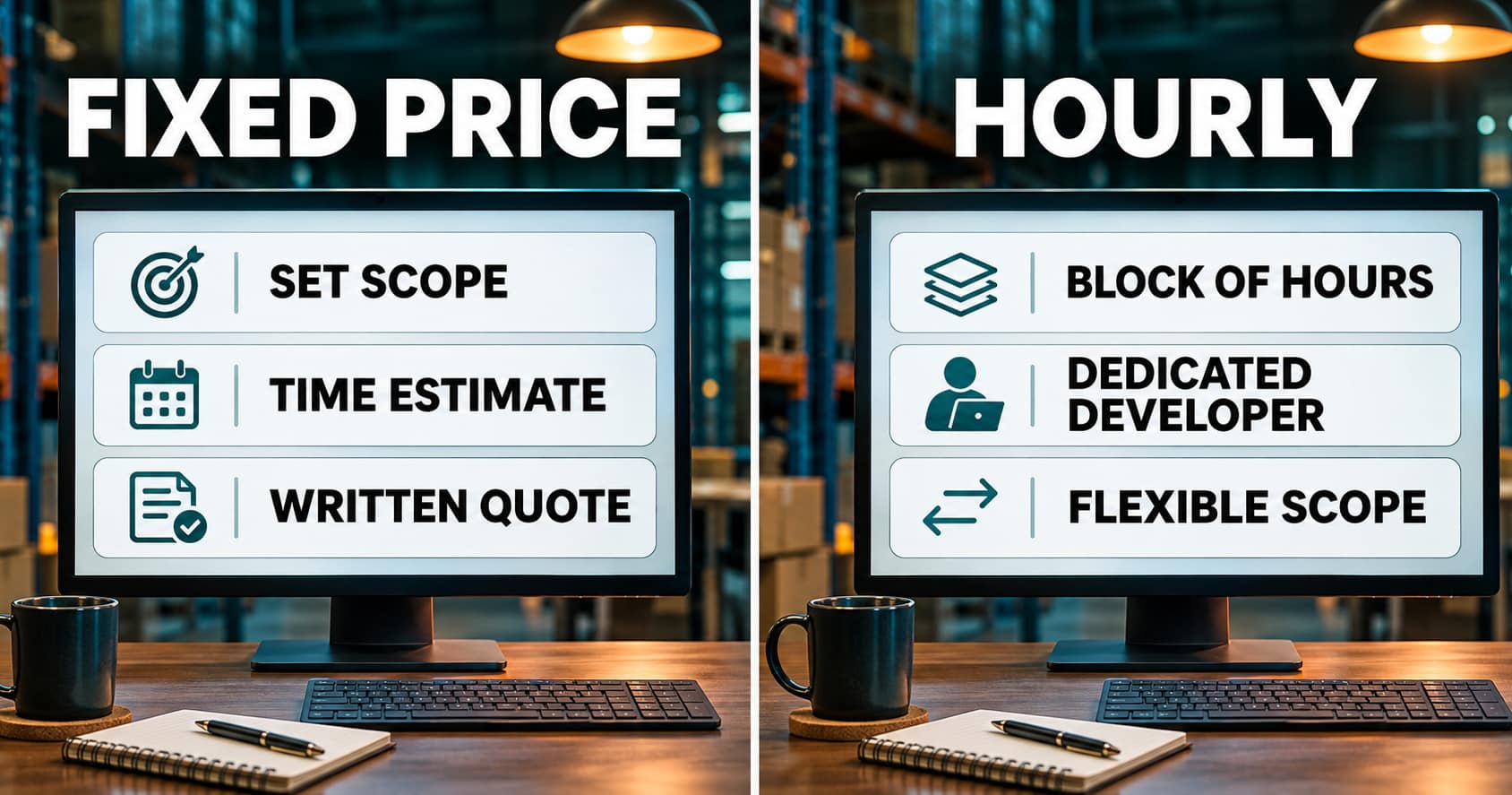
Virtina publishes three ways to work with a Shopify developer, and they suit different jobs.
- Fixed price with a time estimate, for builds with a defined scope.
- A dedicated resource who works on your ongoing project.
- Hourly billing, or a block of hours, for fixes and troubleshooting.
Fixed price suits a clear brief. A dedicated developer suits a long roadmap. Hours suit small fixes where the scope is unknown.
Virtina’s Shopify developer engagement models page describes each one.
What should you ask for in a quote?
Ask for a written quote that covers each of these points.
- The scope, with what is included and what is not.
- Milestones and dates, plus what you must supply and when.
- Testing, including checkout and mobile.
- The post-launch support period and what it covers.
- Maintenance, update, and app fees after launch.
- How extra work is priced and approved.
Treat one low number with no scope as a warning, not a bargain.
Short version: expect a quote after a review, ask for the scope in writing, and compare the full yearly cost.
What have Shopify projects looked like at Virtina?
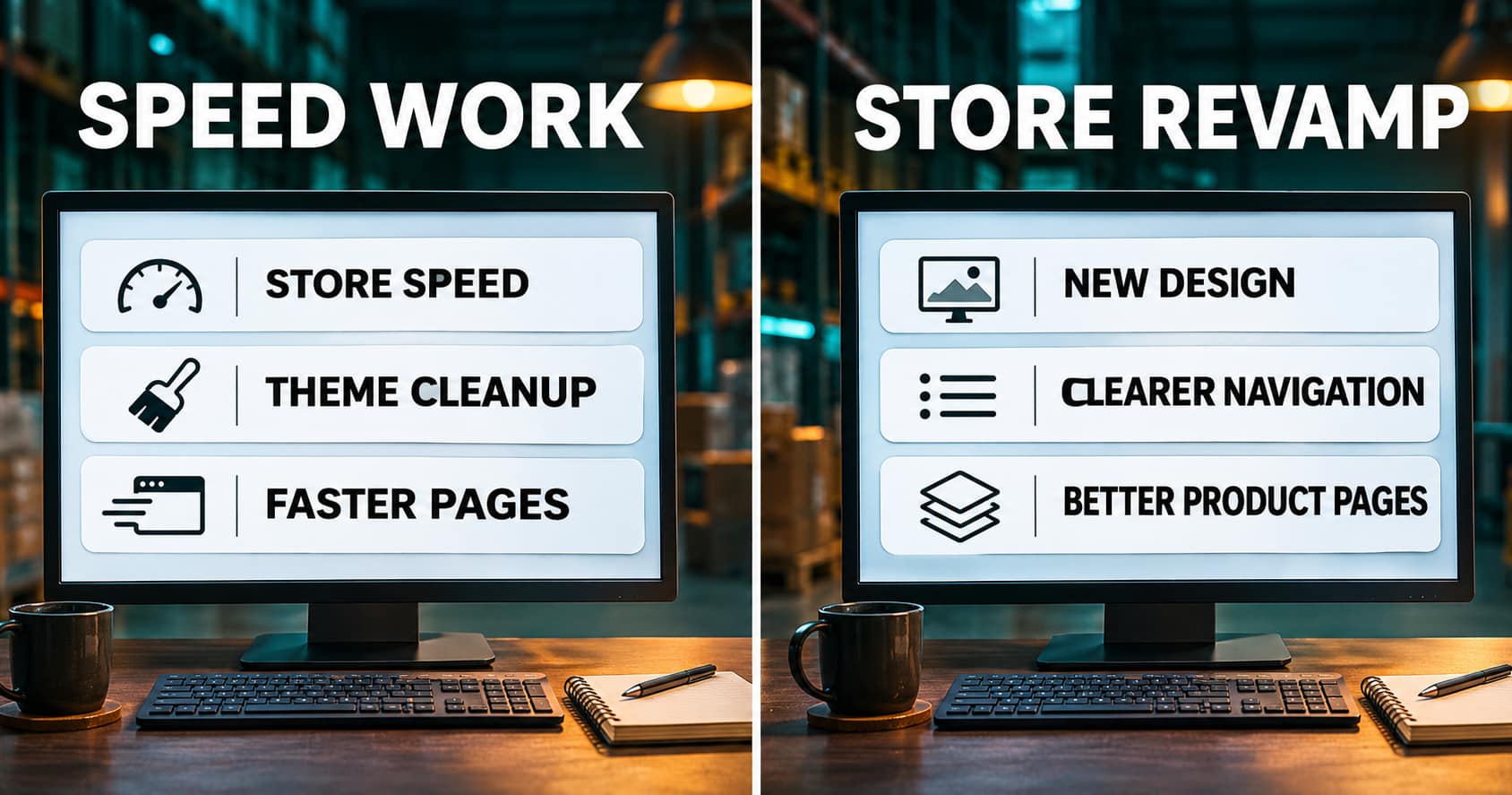
Virtina’s Shopify case pages show two kinds of work: a store revamp and a speed fix. Neither page publishes measured results, so none are claimed here.
Jewelry store revamp on Shopify
A Los Angeles jewelry business, Sunny Domingo, asked Virtina to revamp its Shopify store. The work covered product image display and enlargement, plus button and font changes. It also added a newsletter banner with an automatic discount code.
An Instagram feed page and an FAQ section completed the list. Read the Sunny Domingo case study for the details.
Image and script optimization on Shopify
A US dog bed seller asked Virtina to speed up its Shopify store. The case page doesn’t name the client.
The team compressed about 200 images and minified and combined the CSS and JavaScript files. It then ran cross-browser tests and prepared fallback plans.
The dog bed store case study reports a gradual rise in conversions but gives no speed or sales figures.
What should you take from these examples?
Use them as a model for what to ask any developer. What changed, how was it tested, and how was success measured? A case study with a clear task list is more useful than a big number with no detail.
If you want a second opinion on your own Shopify store, Virtina offers a free store review.
Short version: Virtina’s Shopify case work covers a revamp and a speed fix, and neither case page claims measured results.
What are the red flags when hiring a Shopify developer?
The biggest red flags are no straight price, no real examples, and big promises before the developer understands your store.
Which pricing and scope red flags matter?
Be careful if a developer cannot explain how they price the work. A single low number with no written scope usually grows later. Vague timelines are another warning, since they often hide unclear scope.
Hidden fees are a third sign. Ask about maintenance, updates, and paid apps before you sign.
Which proof and process red flags matter?
Be careful if a developer cannot show live work or a case study. Stores they built should open and run cleanly on your phone. Be wary of promises about results before they ask about your customers.
Also be wary if they will not agree that you own your store, domain, and accounts in writing.
What do good signs look like?
Good developers ask about your buyers, order volume, and tools before they quote. They give a written scope, a support period, and a plain schedule. They also tell you when a theme and apps would be enough.
Short version: walk away from vague prices, missing proof, and unwritten ownership, and favor written scope and honest advice.
How do you work with a Shopify developer day to day?
Working with a Shopify developer goes well when you set one decision maker, one channel, and a weekly update.
How often should you hear from your developer?
Agree on a weekly update and one shared channel on day one. Ask for a short written note on what was done, what is next, and what is blocked. Agree what counts as urgent and how fast replies must come when something breaks.
If the team works in another time zone, agree on overlap hours up front.
Who should make decisions on your side?
Name one person who can approve designs and changes. Many opinions slow a build and raise the bill. Collect feedback internally and send it as a single list.
What access does a developer need?
Give access through a separate account, not your owner login. Keep the store, domain, and app accounts in your name, and remove access when the project ends.
Ask the developer to work on a copy of your live theme. Shoppers then never see half-finished changes.
Short version: one decision maker, one channel, a weekly note, and separate access with ownership in your name.
Should you hire an agency, a freelancer or a full-time developer?
Choose by the size and length of the work. A freelancer suits small jobs, an agency suits projects needing several skills, and a full-time developer suits steady daily work.
When does a freelancer fit?
A freelancer fits small, clear jobs such as a theme fix or a single app setup. You usually pay less overhead and talk to the person doing the work. The risks are a single point of failure and gaps in skills such as design or testing.
When does an agency fit?
An agency fits larger projects that need design, development, testing, and support together. You get a team with backups if someone is away. The trade-off is a higher price and more process, so check who will actually work on your store.
When does a full-time developer fit?
A full-time developer fits stores with constant work, such as weekly releases and integrations. You get deep knowledge of your business. You also carry salary, tools, and management, and one person cannot cover every skill.
Many stores combine them: someone in-house for daily tasks, plus an agency for big builds.
Short version: match the hire to the job, and ask for scope, price and support terms in writing.
People also ask
How do I choose a Shopify developer?
Compare at least three candidates on the same ten questions, then check examples, scope, and support terms. Pick the one with specific answers and a written quote, not the lowest number. A small paid test task can confirm your choice.
How long does it take to hire a Shopify developer?
Hiring takes as long as it takes you to write a clear brief and compare quotes. A defined scope, one decision maker, and a list of must-haves shorten the search. Rushed hiring is where most mistakes start.
Do I need Shopify Plus to hire a developer?
No. A developer can work on any Shopify plan. Some features are limited to Shopify Plus, so confirm what your plan allows before you scope the project.
Can a developer fix a slow Shopify store?
Yes, often. Common fixes include compressing images, trimming apps, and cleaning theme code. Virtina’s dog bed seller project used image compression and script minification for this reason.
Conclusion
Hire a Shopify developer by checking experience, examples, scope, and support, not only price. Ask the ten questions, get a written quote, and treat vague answers as a warning.
Virtina does not publish price figures. It gives a written quote after reviewing your store, and it offers a free store review. If you want a second opinion on your shortlist or your store, talk to Virtina’s team.
Frequently asked questions
How much does it cost to hire a Shopify developer?
Price depends on scope, not one standard rate, and catalog size, theme work, integrations and support all change the quote. Virtina bills Shopify work as a fixed price with a time estimate, with a dedicated developer, or by time spent. Ask for a written scope before you compare numbers.
Should I choose a fixed price or hourly billing?
Choose a fixed price when the scope is clear, such as a theme build or a migration. Choose hourly billing, or a block of hours, for fixes where the scope is unknown. In every case, agree milestones and the definition of extra work in writing.
Is there a warranty on Shopify development work?
Virtina states that its Shopify development work comes with a 30 day support period. Ask what their support window covers, who fixes bugs after launch, and whether app conflicts and theme updates are included. Get it in writing.
What hidden costs should I ask a Shopify developer about?
Ask about maintenance and update fees, paid apps, and extra charges for work outside the agreed scope. A developer who cannot give straight pricing is a red flag. Shopify plan fees and app subscriptions also continue after launch, so compare the yearly total, not only the build price.
When do I need a developer instead of a theme and apps?
A pre-designed theme with a few apps can run a simple catalog and standard checkout. Hire a developer for custom theme sections, an ERP or inventory link, B2B pricing or faster pages. If you are unsure, a short store review shows which category you fall into.
Can I hire a Shopify developer for a small task?
Yes. Describe the task, share your store URL, and ask for a written estimate before work starts. Virtina bills troubleshooting as a block of hours, with extra hours requested if the work needs more. A small job is also a low-risk way to test a developer before a larger project.
Virtina is an eCommerce agency that designs, builds and supports Shopify stores alongside WooCommerce, Magento and BigCommerce.