Summary
The work developers do in eCommerce has changed a lot in the last few years. AI now handles many of the small, routine tasks that used to eat up time, so the real value of a developer comes from how well they think through a problem, not how fast they can type out code. Today, you’re expected to understand how different pieces of a store fit together, how customers behave, and what actually makes a site run smoothly. It’s less about following instructions and more about knowing what will make an online business stronger. This shift has pushed developers to grow in new directions, and these new expectations are slowly becoming the norm.
The eCommerce space is changing so quickly that even good developers sometimes feel like they’re just running to stay in place. Every year, there’s some new tool to learn, customers want pages to load instantly, and businesses keep adding more apps they want their stores to connect with. So it’s no surprise there’s a gap between what developers learned earlier and what the industry suddenly expects from them now. That gap is what we talk about when we say “the skill gap.”
What’s interesting now is how AI is starting to shrink that gap. It’s not here to take anyone’s job. What it really does is help developers understand challenging concepts faster, try out ideas more confidently, and make decisions that actually support the whole business, not just the code. The role is shifting; developers aren’t just building features anymore. They’re thinking about how everything fits together, how a store should be structured, and what will make it perform better in the long run. AI is simply giving them the boost to do that work with more clarity and less stress.Table of Contents
What Does the Skill Gap in eCommerce Development Really Mean Today?
The skill gap in eCommerce has nothing to do with a lack of developers. The real problem is that eCommerce has exploded in complexity way faster than anyone can realistically learn. If you look back about ten years, building an online store was pretty straightforward. You picked a theme, hooked up your payment method, installed a couple of plugins, and honestly, you were good to go. That’s not the world we’re in anymore. eCommerce today is a lot more layered and demanding.
This is far more than “building a website.” It’s building a digital ecosystem that must run flawlessly across devices, geographies, APIs, automation tools, and analytics platforms.
The skill gap arises when developers face tasks that require deeper thinking, architecture, integration logic, performance tuning, CRO strategy, and data interpretation. These demands grow faster than people can adapt. And this is precisely where AI becomes the equalizer.
AI doesn't magically make someone an expert. But it removes barriers that used to take years to overcome.
People Also Ask
⇨ What is the eCommerce skill gap?
It’s not that there aren’t enough developers; it’s just that online stores keep getting more complicated faster than people can keep up.
⇨ How does AI help developers handle all this?
Think of AI as a smart sidekick that handles boring, repetitive stuff so developers can focus on the real challenges.
⇨ Why is thinking about architecture so important now?
A store isn’t just a website anymore; it’s a tangle of systems talking to each other, and you need to see the whole picture.
⇨ How does AI make APIs less scary?
APIs can be tricky, but AI can explain them in plain English and even show where things are going wrong.
⇨ Why should developers care about user behavior?
Even perfect code won’t help if customers get stuck or leave; knowing how users behave is key.
How Is AI Helping Developers?
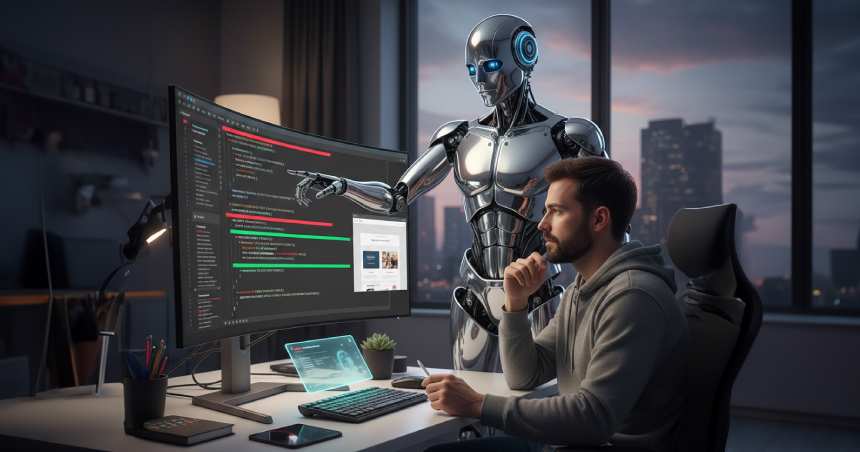
It’s easy to dismiss AI because of the hype around “automation replacing developers.” But the real-world contribution of AI is much more grounded.
AI accelerates learning. It explains complex concepts in simple language. It transforms long documentation pages into something a developer can actually use. It identifies bugs faster. It highlights dependencies in a codebase. It helps developers understand how a system works without spending days digging through files.
But most importantly, AI reduces friction.
Every eCommerce project has dozens of repetitive tasks that drain time and energy. AI helps with these so developers can shift their energy toward the high-value parts of development: architecture, strategy, performance, and optimization.
In other words, AI doesn’t reduce the need for developers; it reduces the time developers waste.
The Skill Shift: The Five Advanced Capabilities Every eCommerce Developer Needs Now
Since AI now handles much of the small, repetitive work, developers are being pulled into a larger role. They have to think about how the whole store works, what might slow it down, and what actually helps a business sell better online.
⇨ How AI Supports Architecture-Level Decision Making
Modern eCommerce is a web of moving parts. Decisions that used to be optional, such as whether to go headless or monolithic, which database structure supports future scale, or how APIs should communicate, are now essential.
Architectural thinking means understanding how the entire eCommerce ecosystem fits together. A developer must know:
⇨ How AI Simplifies Documentation, Payloads, and Endpoints
API work used to be one of the toughest parts for mid-level developers. eCommerce stores depend on tons of APIs like payments, shipping, inventory, loyalty, analytics, CRMs, ERPs, and the list keeps growing. And every API feels like its own world, with different documentation styles, odd error messages, unique authentication rules, and its own way of structuring data.
AI simplifies this entire process:
This is game-changing for eCommerce development. Now, even a developer with limited backend experience can figure out a complex API integration much faster, something that used to be a senior-only task. By making the learning curve less steep, AI helps more developers step up and handle integrations confidently, closing one of the biggest gaps that used to separate juniors from experienced engineers.
⇨ How AI Helps Developers Understand User Behavior and Conversion Patterns
Coding alone does not determine whether an eCommerce store succeeds. The experience determines whether users complete the process or abandon it.
Developers today must understand:
In short, developers must think like CRO strategists, not just coders.
AI really takes the guesswork out of analytics for developers. Instead of staring at heatmaps or bounce rates and wondering what’s happening, it breaks everything down. It shows where people get stuck, where they stop scrolling, or why they put items in the cart and then leave.
When developers understand the real reasons behind user behavior, their choices start to affect sales, not just design or code. They can see what makes the experience smooth and what trips users up. And once they start building with that kind of clarity, their work actually feels meaningful, and the skills gap naturally begins to shrink because they’re no longer working in the dark.
⇨ How AI Helps Diagnose and Fix Speed Bottlenecks
Performance tuning has always been one of the most complex parts of eCommerce development. A slow store loses conversions, ranking, and customer trust. But identifying what slows down a store can feel like detective work.
AI changes this by analyzing performance reports and clearly breaking them down.
A developer can ask AI:
Rather than getting lost in Lighthouse reports, waterfall charts, or third-party scripts, AI points developers straight to what actually needs fixing. Even someone relatively new can now tune a site’s performance at a level that used to take years to master. That one change alone removes a major barrier that used to make the skill gap so noticeable.
⇨ How AI Makes Data Interpretation Easier and More Actionable
eCommerce decisions must now be data-driven. This requires more than reading numbers; it requires knowing what those numbers imply for experience, strategy, and revenue.
Developers influence metrics such as:
⇨ Is AI Closing the Skill Gap or Creating a New One?

AI does not eliminate the need for developers. It enhances their ability to work at a higher level.
The skill gap closes because AI gives developers:
The only “new skill gap” that appears is between developers who use AI effectively and those who do not. The future of eCommerce development belongs to those who combine technical understanding with AI-powered strategic thinking.
AI doesn’t take something away from developers; it adds leverage.
The ones who grow with it will not just keep up with eCommerce, they will lead it.
Conclusion
eCommerce development isn’t suddenly getting simpler, but developers finally have something that helps them keep up rather than feel overwhelmed all the time. AI isn’t some magic tool that turns someone into a senior engineer overnight, and it definitely doesn’t replace real hands-on skill.
Frequently Asked Questions (FAQs)
AI turns messy data into something you can actually read and act on—no more guessing why people leave the site.
AI can quickly spot slow scripts or heavy files, so even a newer developer can speed things up without pulling their hair out.
Numbers tell the real story like which pages lose customers or which features work—and AI helps make sense of them.
Yeah, but it’s about who knows how to use AI smartly and who doesn’t.
It frees them from tedious tasks so they can focus on making the store faster, smoother, and better for shoppers.