Summary
Integrating a multi-vendor module into your Magento 2 store enhances efficiency and enriches customers' shopping experience. Adopting a multi-vendor setup can boost your store's performance and attract more buyers.
There are various marketplace options that you can implement to elevate your Magento 2 store and expand your online business with an increased return on investment.
Multi-vendor marketplaces are transforming the concept of eCommerce, enabling vendors to sell their products through a single platform. This, in turn, helps them increase the variety of their products, making it much easier and more convenient for the end customer to shop.
A multi-vendor marketplace provides great exposure to a greater audience without having to deal with the inventory, while customers can get a variety of choices in one place.
The fact that $8.7 trillion of sales are forecasted via multi-vendor by 2025 highlights its growing importance in the eCommerce landscape, making it the right time to focus on it.
This comprehensive blog will help you understand the multi-vendor module for Magento 2 to grow your business.
Table of Contents
Key Features of a Marketplace Multi-Vendor Module

While choosing the right multi-vendor eCommerce platform, ensure its features align with your business goals, including enhanced efficiency and customer experience.
Here are some of the key features you need to look out for:
1. Vendor Management
Effective vendor management enables online businesses to establish stronger relationships, optimize costs, and assure reliability and quality of products or services, resulting in improved performance that appeals to customers.
The overall vendor management involves onboarding and registering vendors, thus setting the basis for an easy partnership. It focuses on receiving all the necessary information about a vendor, verifying their credentials, and complying with the platform's set standards.
The vendors can then access their profiles and dashboards to handle listings, observe performance, and analyze sales analytics. These tools help the vendor optimize their operations and enhance the customer experience, increasing sales.2. Product Management
Product management ensures that all your products meet quality, branding, and compliance standards before reaching the market. This is done through strategic planning, market research, and team collaboration to drive a product's success.
A robust product management process helps organize, update, and present your inventory in an easy-to-navigate way, which is crucial for driving sales.
Product management also consists of product approval workflows to reduce the risk of errors and improve the overall quality of product listings for customer trust by consistently offering reliable and well-presented products.
3. Order Management
Order management is essential to multi-vendor marketplaces since it facilitates the effective and well-organized processing of orders from multiple vendors. Without it, marketplaces can encounter inventory gaps, delayed deliveries, and poor communication, which could harm their reputations.
Effective order management allows marketplaces to deliver real-time order tracking and status updates, ensuring the market runs smoothly.
It also keeps all parties informed and on the same page, thus fostering a highly satisfying customer experience and improved vendor collaboration.
4. Commission and Payments
Commission and payments are essential for smooth, secure, and transparent transactions between the buyer and the seller.
With several vendors in a marketplace, ensuring accurate and prompt payment for their sales is critical. Commission and Payment automates this process in determining and distributing commissions based on a pre-set rule. The process saves time and reduces errors. It instills trust because your vendors get paid on time and without hassle.
This feature provides an opportunity to increase operational efficiency and build a reliable environment for vendors and customers.
5. Reporting and Analytics
Reporting and analytics provide a comprehensive view of the performance of sales and individual vendors.
Monitoring each sale, understanding performance metrics, and analyzing vendor success in real time help identify trends, identify weaker points, and make strategic decisions to improve overall efficiency.
These analytics tools provide marketplace administrators with the data they need to optimize operations, improve relationships with vendors, and ultimately improve the experience for both sellers and buyers.Benefits of Using a Multi-Vendor Module for Magento 2

Leveraging a multi-vendor module for Magento 2 to manage and scale online businesses by streamlining operations, boosting vendor collaboration, and enhancing customer experiences.
Here are other benefits of a multi-vendor module:
⇨ Increased Product Variety
The multi-vendor module for Magento 2 allows you to combine different merchants on one platform, increasing the appeal of your business and diversifying the products you provide.
Because each vendor contributes unique things, your customers can access a wider variety and range of options. This implies that you can address the needs of a more extensive range of customers and remain ahead of industry trends.
⇨ Scalability and Flexibility
The multi-vendor module for Magento 2 allows your online business to scale seamlessly, where several suppliers are responsible for maintaining their inventory and sales.
This enables you to create a more dynamic and responsive business model and assists you in responding effectively to shifting market demands.
A multi-vendor system ensures that your store is flexible and can accept an ever-evolving range of products and providers, even if market trends change. This gives you a competitive edge and fulfills your customer needs.
⇨ Enhanced Customer Experience
This multi-vendor setting improves the customer shopping experience by making the whole process smooth and increasing the range of products your customers have.
The multi-vendor setup allows users to easily switch between different products from different vendors on a single platform.
This seamless experience simplifies the overall shopping journey and caters to customers’ diverse tastes, targeting a wide range of shoppers.
⇨ Revenue Generation
Multi-vendor marketplaces involve different vendors selling through your platform, which allows you to earn commission and fees on every transaction, which brings steady income.
This approach diversifies your revenue and attracts more customers due to the variety of products available.
Your platform earns a percentage of each sale, leading to enhanced profitability without extensive inventory management, growing your business, and boosting revenue generation.Challenges And Solutions

The most common challenges in multi-vendor marketplaces include vendor management and technical performance concerns, which hinder business growth. Hence, it is important to identify and resolve these issues at the right time.
⇨ Vendor Management Issues
Managing vendors can impact efficiency and overall performance; therefore, understanding the possible issues and their solutions is crucial for smooth operations.
Here are the common management challenges and practical solutions to tackle them:
⇨ Technical and Performance Concerns
If you want your multi-vendor marketplace to continue running smoothly, you must address performance and technological issues.
These issues can affect everything from system dependability to site speed, affecting vendor satisfaction and user experience.
Top Multi-Vendor Marketplace Extensions for Magento2

The best multi-vendor marketplace extensions for Magento 2 offer a variety of choices to meet different business requirements. Here are some exceptional options:
⇨ Webkul Multi-Vendor Marketplace
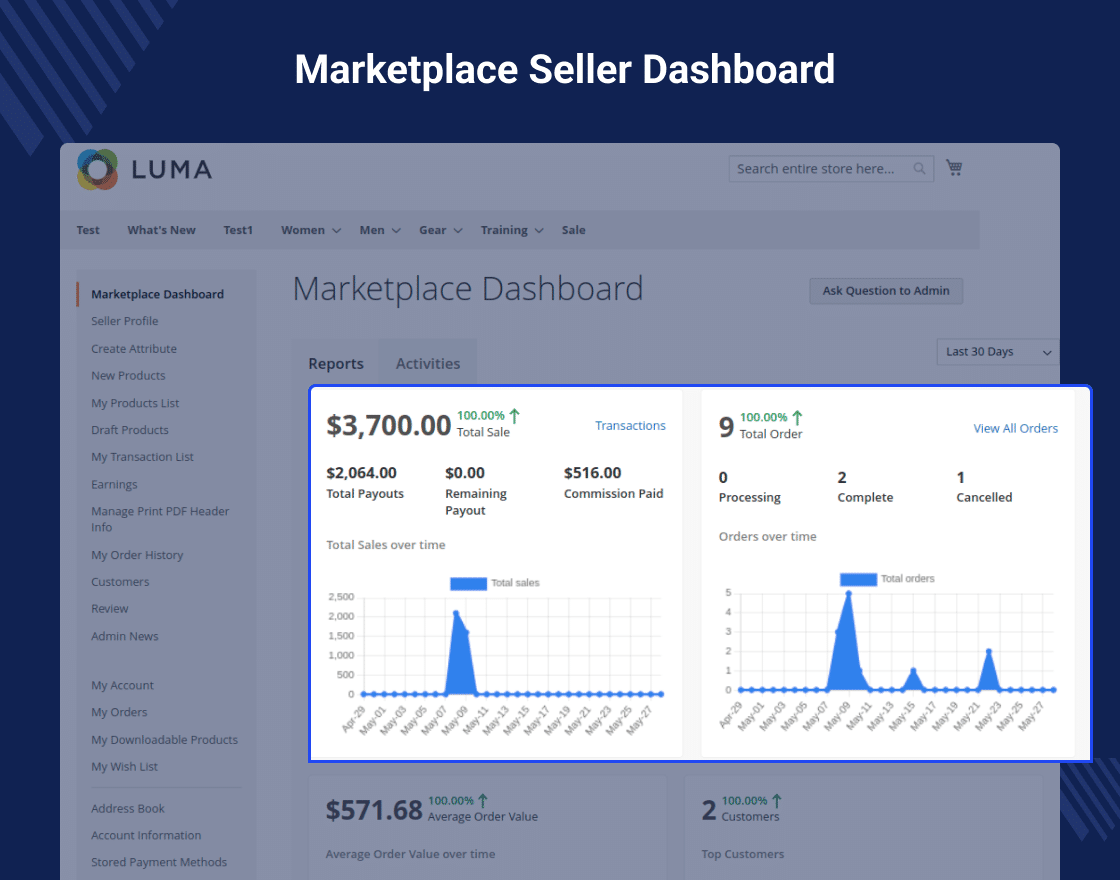
Webkul's multi-vendor marketplace offers essential features like vendor management, flexible commission structures, and detailed reporting tools.
These robust tools help streamline operations, enhancing vendor autonomy and providing valuable insights into marketplace performance.
It enables vendors to independently manage their products, orders, and shipments while store owners retain complete control and oversight of the entire marketplace.
The extension supports various payment methods and shipping options, ensuring versatility and adaptability to different business needs.
⇨ Magenest Multi-Vendor Marketplace

Magenest provides an easy-to-use interface that simplifies managing vendors, items, and orders.
Its extensive features include vendor dashboards, modifiable commission settings, support for numerous payment channels, and shipping options.
With its seamless user experience for both buyers and sellers, Magenest facilitates the easy scaling of multivendor marketplaces to meet a variety of business needs.
⇨ CedCommerce Multi-Vendor Marketplace

CedCommerce offers a stable multi-vendor system with numerous customization choices and a simple setup procedure.
It offers features like product reviews, vendor-specific shipping prices, and sophisticated commission management are available.
The extension’s seamless integration with several payment gateways and delivery partners allows you to customize your online store to meet your company's demands.