Summary
B2B eCommerce isn’t just changing; it’s getting a complete makeover. What used to be slow, manual, and buried in paperwork has become a faster, digital way of doing business. Buyers now want more control, quick service, and a shopping experience that actually feels easy.
Introduction
The world of B2B commerce isn’t just catching up to retail anymore. It’s rewriting the rules. What used to be a slow, paperwork-heavy process has turned into a digital race, driven by this new generation of buyers who expect the same ease they get when shopping at home. The personalized, digital experience is replacing the personal, analog relationship.
The market has responded with dizzying speed. The choice for every B2B company today is to build nimble, intelligent, AI-driven platforms. This is the B2B Commerce Revolution. And in this comprehensive deep dive, we’ll explore the exact strategies, technologies, and pivots you need to make to survive and lead the future.
Table of Contents
What is B2B E-Commerce?
Business to business (B2B) is a popular online business model fueling the current global economy. It is aided by rapid market growth as every other online purchase is supported by B2B sales. B2B focuses on large-scale sales of products, services, or information to peer entrepreneurs, and is a classic contrast to B2C (business to consumer) business models.
B2B provides eCommerce retailers with the added benefit of stronger online presence, improved sales, lower costs, better visibility and awareness of the current marketing trends. B2B facilitated businesses in placing orders and accounting digitally instead of going through the hassles of manual processes.
The History
With online shopping getting popularized owing to the economy of time, effort and location, the evolution of B2B is an interesting illustration. E-commerce took root almost 40 years ago, in the 70s, with the advent of teleshopping. It accelerated into popularity when the Internet was opened to commercial purposes in 1991. Soaring off to new heights with the commercially lucrative opportunities of the B2B, it soon branched out into the realms of B2C. The latter became an overnight sensation, providing a human experience to the buyers with customized marketing tendencies, thereby increasing their customer bandwidth to gigantic proportions.
In the 1970s, eCommerce meant electronic transactions with the aid of technologies like Electronic Funds Transfer (EFT) and Electronic Data Interchange (EDI). Though internet was open to business by 1991, it took four years to gain popularity, with the development of security protocols like HTTP and DSL which allowed speedy access and a continuous connection to the Internet. The history of eCommerce remains incomplete without a mention of Amazon (1994) and EBay (1995), which changed the fate of e-commerce entirely by starting off electronic transactions and offering a wide range of products.
By 2000s, numerous US and European companies started transactions through the World Wide Web. The term eCommerce evolved into the process of securely buying and paying online. Retailers slowly recognized the potential of trading online and started to add eCommerce to their sites. B2B grossed $700 billion in transactions by the end of 2001. By 2007, around 3.4 percent of total sales came from eCommerce, and the vertical is still on the path of growth since it provides distinctive advantages of advertising, time, expenses and profit over the regular ‘brick and mortar’ shops. We currently have five largest and most popular internet retailers, namely, Amazon, Staples, Dell, Hewlett Packard and Office Depot.
The Human Side
The key to any successful transaction is to understand the psyche of the human on the other end of the business. Once the strategies are in tune with the same, the industry will gain momentum. Commerce is human to human at the core. The need of the hour for B2B is to enhance the user experience and bring in affable approaches in selling to the human beings at the other end of the transaction, in line with the consumer-centric design thinking and growth hacking techniques implemented by B2C to accomplish its current volume in business.
With the competition getting tougher by the day there is a push among the retailers to bring in as human a touch in transactions as possible to appease the need of the clients. And the upgrade in service standards in the market has schooled the consumer mindset to demand service of the highest quality in any transaction they are part of. This decisive point needs to be kept in mind at the inception and expansion phases of any B2B business.
The onset of IoT (Internet of Things) has also fueled the urgency in B2B enterprises to mark their presence in omnichannel e-commerce platforms. The arrival of virtual assistants like Alexa, Siri, etc. in the online field is pushing more and more buyers into making online purchases. Thus B2B is automatically forced to evolve into online specialists to be at par with the growing competition.Why is B2B E-commerce Important?
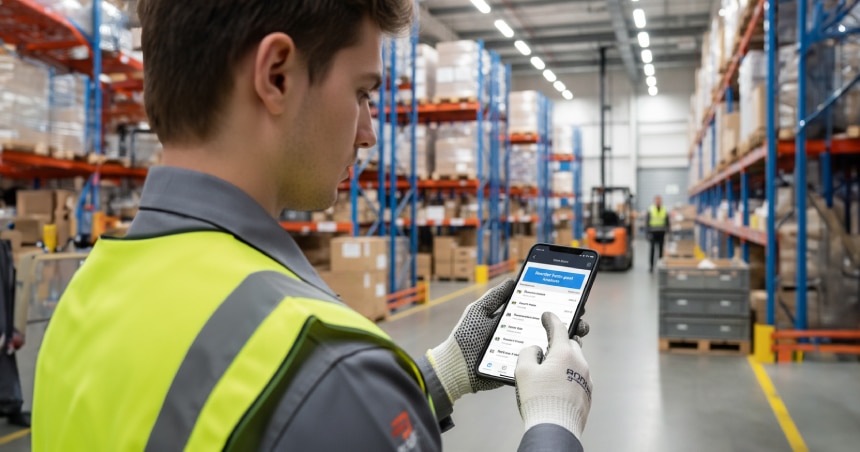
With the current market trend, where every transaction has moved online, the best way to thrive in the eCommerce world is to expand your platforms to accommodate the progression. It would be a “Business Suicide” to refrain from investing in digital platforms and losing out on million dollar businesses, revenue and customer base. Adding the human touch to the business is sure to reap assured profits in the B2B growth.
The competition is on the hike with rival companies adding more business lines, product types, and SKUs. Studies have shown that (Ref: Forrester Research – The Death of a B2B Salesman) 74% of B2B buyers favor online purchases to in-person sales and 93% prefer buying online once they are sure of the product. Also, 50% of the manufacturers have an e-commerce site and 70% of them planning to launch one within the next two years. Forrester Research Inc. projects that by the end of 2018, the online commerce is expected to hit a total sales of $9 trillion in the US alone. This figure was arrived at considering all the six channels of B2B online commerce namely, employees on suppliers’ websites ($954 billion), SaaS e-procurement systems ($834 billion), e-procurement of services ($185 billion), purchase order/invoice networks ($2.71 trillion), EDI networks ($4.70 trillion) and travel & entertainment services purchased ($218 billion). Shifting digital can showcase your products to a broader consumer base without geographical or timeline limitation, turning it into a 24x7x365 buying experience.
What are the Advantages of B2B E-commerce?
B2B selling comes with an array of substantial business advantages:
1. Bigger Customer Bandwidth
You would be surprised to know that B2B sellers have managed to beat online opportunities of B2C by almost double the bandwidth. By 2018, B2B e-commerce is predicted to reach $9 trillion in the US alone. Most companies are stumped at where to start off on the remodeling. When a monumental shift in trends is expected, it would be fatal for traders to pass on exploring online opportunities.
2. Bigger Order Values and Higher Conversion Rates
The B2B market is capable of mammoth business opportunities owing to its higher average order values, quicker deal closures by buyers, and improved conversion rates. The average order value of a B2B transaction is around $491, as opposed to $147 for B2C. Plus, B2B websites have reported average conversion rates at 10%, while B2C clocks just around 3%. Additionally, once the brand trust is created, B2B customers are quick to buy, that too in colossal amounts, in comparison to B2C customers.
3. Increased Scalability
The advent of cloud-based eCommerce platforms has changed the face of online marketing. Contrary to the earlier platforms, cloud-based platforms sync seamlessly with other software and help sellers speed up their order fulfillment, order processing, and inventory tracking. Additionally, automating processes has made complex operations like partial delivery and multi-warehouse shipping deft and fool-proof.
4. Fresh Customer Acquisition
The target customers for online businesses are the younger digitally native community who spend most of their lives on the internet and think online first. They research, study trends, and shop online. Studies show that 89% of B2B researchers make use of the internet during the research process. Forrester has also reported that 30% of the buyers make most of their work purchases online, and in the next three years, 56% is expected to make half or more of their investments online. Losing out on this significant chunk of prospective clientele would be detrimental to any business. The B2B merchants stand to win a ‘three-fer,’ namely, reduced cost of customer service increased revenue and augmented customer loyalty.
5. Correlation to B2C
B2B sites which were initially touted as spaces for existing customers to place reorders have undergone a drastic transformation in the past years and have started resembling B2C sites with respect to providing prospects with opportunities to research and compare products. The sites have slowly converted themselves to platforms targeted at acquiring a fresh influx of customers. Following the trends, eCommerce providers like BigCommerce, Shopify Plus, and Magento have added more B2B functionality to their platforms. Utilizing these components to keep the sites simpler, user-friendly and focused on elementary processes to increase conversions would support better B2B business.
6. Stay Ahead of the Competition
Despite all the growth in B2B e-commerce, the online participation is still at the minimum. Only 18.8% of US B2B companies say that they receive more than half of their revenue from e-Commerce. There is an enormous untapped market waiting for fresh entrepreneurs who are venturing into the field right now. Before e-commerce becomes mainstream, traders have a vast potential to beat the competition through a breakthrough and carve out a niche for themselves. Your time is today!
7. Enhanced Brand Visibility
Though online B2B selling has technically been around for the past 20 years, the portals are outdated and cater to only a segment of their existing customers. They have to be revamped to reach more customers. With the current customization available on the sites, it gets much easier to drive sales online than through the archaic in-person methods, as customers get an opportunity to research and compare products online.
8. Improved Sales Engagement
Since the B2B sites are deemed to look more like B2C platforms, there is an additional potential of selling directly to consumers. Part of the marketing catalogs could be sold to customers owing to the easier processes and improved operational efficiencies. All you need is to invest in compelling digital marketing and merchandising.
9. Exceptional Customer Service

Contrary to the conventional selling methods, B2B e-commerce facilitates a better customer experience akin to Amazon and Flipkart. It provides the merchants with an omnichannel experience, opening up chances of comparing products and pricing online, faster order and accurate delivery with a personal touch. The customers are set to get a full-on personalized customer service experience. The customer service bar has been on the rise with sites like Amazon being popular, and it is increasingly difficult now to curb customer defection. B2B hence is under pressure to present a faultless shopping experience to the customers.
10. Multi-Site Capability
Being electronically connected to suppliers means that all the hindrances with regards to phone calls, spreadsheets, manual tax order forms, etc. can be done away with. Retailers would have a concrete idea about their inventory levels, shortfalls, supplier inventory levels, etc. and can faultlessly manage multi-supplier communications without time and workforce disuse.
How is B2B eCommerce Changing Today?
It’s completely transformed. Not long ago, buying for a business meant endless phone calls, forms, and waiting around for quotes. Now it’s all happening online, faster, simpler, and way more efficient. Buyers want things to move quickly, they want control, and they expect the same easy experience they get when shopping on sites like Amazon.
The B2C-ification of Business Buying
The average B2B buyer isn’t sitting behind a fax machine anymore; they're millennials and Gen Z decision-makers who grew up scrolling through Amazon and Netflix. They expect the same simplicity and speed when buying for their companies.
Why is the B2B world starting to look more like retail (B2C)?
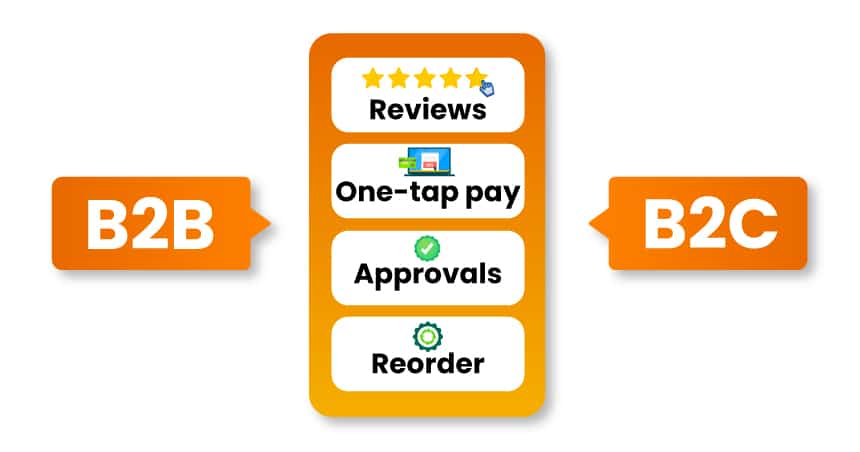
Because the people making B2B buying decisions are millennials and Gen Z, the same crowd used to Amazon, Netflix, and instant checkout, they expect the same speed, transparency, and personalization when buying for their company.
⇨ Self-service is taking over
Most people don’t want to deal with a sales rep anymore. They’d rather look things up, compare options, and place the order themselves. That’s why your website can’t just list products, it has to do the heavy lifting too. Buyers should be able to get quotes, get approvals, track their orders, and reorder when needed, all without waiting on someone to help.
⇨ Personalization is expected
Customers now want to feel like you get them. With the help of data and AI, businesses can show the right products, offer prices that fit each buyer, and even suggest what they’ll need next based on past orders.
⇨ Mobile is everything
Business doesn’t stop when people leave the office. Field teams, technicians, and buyers use their phones for almost everything, including purchases. If your site isn’t fast, easy to use, and looks good on a phone, you’ll lose them before they even consider buying.
How is AI Changing B2B Operations?
Artificial intelligence isn’t a buzzword anymore; it's the quiet engine running modern B2B commerce. For example, no one likes waiting days for a quote. With smarter pricing tools, numbers update in real time based on stock, demand, or customer agreements. This means fewer emails, less confusion, and deals that move much faster.
What Does “Real Omnichannel” Mean for B2B Businesses?
The days of departments working in silos are done. The future of B2B is about connecting one system that links your website, warehouse, sales team, and data in real time.
⇨ Consistency
No matter where a buyer interacts with your business, be it online, through a rep, or on a marketplace, the details should always match. The same pricing, stock updates, and delivery timelines should always be the same. Anything less creates confusion and costs trust.
⇨ Transparency
Buyers don’t want to chase updates or guess what’s in stock. They want clear, live information before they hit “buy.” That’s why real-time sync between your e-commerce platform, ERP, and order management isn’t just nice.
⇨ Networking
You know, B2B doesn’t really work like a straight supply chain anymore. It’s more like everyone’s part of the same web. The suppliers, the delivery folks, and even the finance team are all connected and sharing information all the time.
What is Composable Commerce and Why Is It Important?
If your eCommerce setup tries to do everything in one place, you’ll hit limits fast. That’s why more companies are switching to composable commerce, a flexible way to build your system piece by piece.
Instead of relying on one big platform that’s just “okay” at everything, businesses are picking the best tools for each job, maybe a product manager or a separate pricing engine.
People Also Ask
⇨ How is B2B e-commerce changing today?
It’s changed a lot. People don’t wait around for calls or papers anymore. Everything’s online now, faster, simpler, and you can do most things yourself.
⇨ Why does B2B feel more like retail now?
Because, well, it’s the same people buying. They shop online at home, so they want the same easy thing at work too.
⇨ Why is self-service so common now?
Most folks hate waiting for replies. If they can see prices and order by themselves, they’ll just do it. Saves time for everyone.
⇨ What does personalization mean here?
Nothing fancy. Just showing buyers what fits them best like what they’ve bought before or what they might need next.
⇨ Why is mobile such a big deal?
Everyone’s on their phone. If your site’s slow or messy, they’ll leave. Simple as that.
What are the New Channels in the B2B landscape?
Marketplaces are where the action is now. Whether it’s niche platforms or big names like Amazon Business, that’s where buyers are spending their time. If your brand isn’t there, chances are, they’re not finding you.
Social media has also become part of the buying process. People are checking out products on LinkedIn, scrolling through TikTok demos, or chatting about WhatsApp options. Buying decisions are being made in the same places people hang out.
And here’s what new buyers care about: how things are made. More companies want suppliers that are serious about the environment and fair practices. Being affordable isn’t enough anymore; people want to buy from businesses that stand for something.
Traditional vs. Modern B2B Commerce
Aspect | Traditional B2B | Future B2B E-commerce |
|---|---|---|
Buying Process | Manual, rep-driven | Self-service, digital-first |
Customer Experience | Generic | Personalized, data-driven |
Platform Structure | Monolithic | Composable & modular |
Channels | Limited (mostly offline) | Omnichannel, marketplace-driven |
Decision Cycle | Long, multi-step | Shorter, AI-assisted |
Data Flow | Disconnected systems | Unified, real-time integration |
The Bottom Line
The future of B2B e-commerce isn’t about copying retail; it’s about going further. The companies that will really win are the ones that see their online channel as the heart of the business, not just another way to make sales.
To achieve this, they’re building systems that can adapt quickly, using AI to work smarter, and creating self-service experiences that feel as easy as shopping online.
It’s no longer a question of if you’ll sell digitally; it’s about how well you’ll make it work.
Frequently Asked Questions (FAQs)
AI just makes boring stuff easy, such as pricing, updates, and follow-ups. It keeps things smooth and quick.
It means no confusion. Everything should match up if someone talks to sales or orders online.
It gives you freedom. Instead of sticking to one big system, you can mix and match tools that work best for you.
People find products everywhere like marketplaces, LinkedIn, and even WhatsApp. It’s all connected now.
They just do. People want to buy from brands that care about people, the planet, and everything else.
B2B’s not what it was. It’s fast, digital, and keeps changing. You either keep up or fall behind.